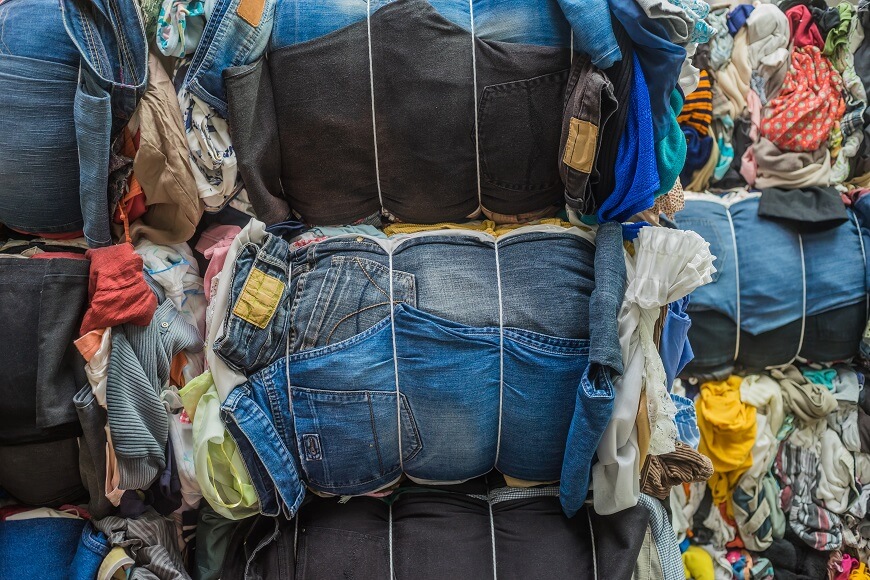
In the UK, a Yorkshire-based recycling company tackles textile waste by recognizing used clothing as a profit center. MyGroup is now investing heavily in an approach for collecting, processing, and re-designing worn goods. This plant—and others like it—could work as a framework for other micro-level facilities across the developed world.
MyGroup intends to invest more than $600K in their new facility to sort, grade, clean, and deconstruct second-hand items before transforming the fabric into new garments and home accessories. The approach is an extension of a their broad-based recycling business. We are drawn to their model for three reasons:
Cost. The modest investment suggests that approach is viable for smaller communities. A manageable capital outlay for a limited-scale facility, rather than for an outsized industrial plant, offers a direct return-on-investment sightline, ensuring project sustainability.
Footprint. In this example, the factory component of the project is about 1,300 square meters, consistent with the cottage-industry quality of the clothing trade. Facilities of this size may not require the same sort of delays in zoning or environmental approval that are often required for more prodigious operations.
Impact. The project could employ some 30 people at its Hull, Yorkshire facility. The city is economically-disadvantaged, with persistently high unemployment. An article in The Guardian once asserted that the city may be “consigned a future of poverty, isolation, and even ridicule.”
This sort of micro-facility stands in contrast to large global projects with deep technology appeal. Also based in the UK, for instance, is Worn Again Technologies. The company uses chemical treatments to convert some textiles into fresh fibers at an industrial scale. They are now building a demonstration plant in Switzerland, while offering licensing partnerships worldwide.
The size of the used clothing industry is so large that many developing nations, including Nigeria and Indonesia, have banned or phased out the import of second-hand items to protect their domestic textile industries. Which nations are currently the world’s largest buyers? The data is murky, but Ghana and Pakistan are prominent destinations for clothing bales. Consider this point: As much as 100 tons of worn garments arrive in Accra every day from Western sources.
The biggest obstacle to success in the textile-recycling business may be greater demand from consumers themselves. Fast-fashion retailers Zara and H&M have introduced collections based on recycled textile waste. The effort has boutique qualities; it is absent the critical mass that would truly bolster the circular economy. Industry experts suggest that as little as one percent of textiles globally are recycled into new clothes.
Retail markets may not be the only component of profitability, though. The European Union is currently drafting legislation that will require the fashion industry to collect textile waste equivalent to a certain percent of clothing production. Those arrangements will in effect create a universe of dedicated wholesale customers for textile recycling. We expect Brussels’ leadership to be followed elsewhere around the world. ■
Our Vantage Point: The scope and challenge of textile waste is so large that we may be ignoring smaller-scale opportunities to combat the problem. Local projects offer a direct return-on-investment sightline, while providing durable economic impact.
Learn more at Just Style
© 2023 Cranganore Inc. All rights reserved.
Unauthorized use and/or duplication of any material on this site without written permission is prohibited.
Image Credit: Fotoschlick at Adobe Stock.