The Russia-Africa Summit on July 27-28 was an awkward affair. For some analysts, the event spotlighted how isolated Putin has become. That may not be entirely true. The raw economic strength represented in St. Petersburg—including heads of state from all of North Africa, except Tunisia, and the country of South Africa—was notable under the circumstances. Still, some 43 national leaders came to the pre-pandemic summit in 2019. Mere ambassadors and ministers dominated the mix this year.
Rather than count and color delegations, the better angle here is to consider the diffuse summit agenda. Egypt was there to lobby for wheat and corn, while South Africa aspired for diplomatic credibility. Brazil managed to make its way onto the program through Dilma Rousseff, now president of the BRICS development bank and protégée of President Lula da Silva. Wagner chief Prigozhin was spotted at the sidelines. What we are seeing is not the isolation of Putin as much as the fractionalization of Russian influence. A piecemeal, here-and-there empire is far more dangerous than a unified one.
Russia may care more about Africa, than Africa cares about Russia. The only real imperative in St. Petersburg was for a handful of African nations to walk away with essential grain aid. Agriculture and humanitarian issues aside, the continent is primarily interested in capital and technology, not guns and mercenaries. One clue on the future of Africa is to look at that massive $2 billion airport under construction in Rwanda. The larger-than-life project is being built by Qatar. ■
Learn more at The Economist
© 2023 Cranganore Inc. All rights reserved.
Unauthorized use and/or duplication of any material on this site without written permission is prohibited.
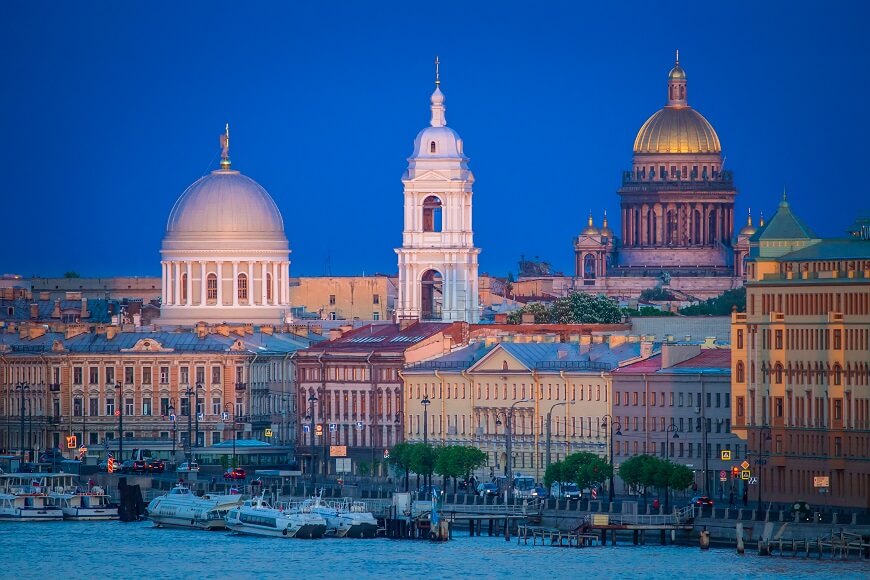
Image shows St. Petersburg skyline. Credit: Grispb at Adobe Stock.