Sado Island offers nostalgia for many Japanese. It is the site where workers for the Tokugawa Shogunate achieved almost perfect purity in its gold production through handicraft methods. In the 1600s, the mines were responsible for as much as ten percent of global gold output.
Based on that partial history, Tokyo aspires to include the mines on Sado Island on the UNESCO World Heritage List. The effort has lingered for years; the original application dates to 2010. It is still unclear if the inscription goal will be reached at the UNESCO World Heritage Committee session in New Delhi at the end of this month.
Korea has a few objections to Japan’s truncated history of the Sado mines, triggering the UNESCO nominating committee to ask Japan for “more information” in support of the current application. At stake is the interpretation of the role of forced Korean labor between 1910-1945. Some 2,000 Korean workers were held on the island to dig for gold. Conditions were atrocious, if not deadly. Because of their efforts, the peak year for gold production at the site was 1940.
An Asian studies scholar offers the following perspective on one Korean man:
Im T’aeho worked every day from morning until night, mining for minerals deep inside the dusty mines. He stated that cave-ins happened almost every day… This heightened his constant death anxiety. The approximately 90-minute walk back from the mines to the dormitory at night were excruciating. It was a difficult and mountainous path with heavy snowfall in winter, reaching high above his knees.
See Nikolai Johnsen, “The Sado Gold Mine and Japan’s ‘History War’ Versus the Memory of Korean Forced Laborers” (The Asia-Pacific Journal, 2022).
Korea is unwilling to negotiate its position. Officials want Japan to include the full scope of twentieth century history at the site. An idea in circulation is a memorial to the workers. A spokesman for the Korean Ministry of Foreign Affairs clarified, “Whether we will oppose [the application] or not depends on Japan.”
Seoul and Tokyo have long argued about historical interpretation of the occupation years. Some expected the bilateral comfort women agreement of 2015 to be a high watermark for the issue. Aspersions linger. As recently as March, the Korean foreign ministry disclosed, “Compared with the previous editions approved in 2020, school textbooks were revised to further water down the coercive nature of wartime wrongdoings.”
Economic Backdrop
Sado Island is about 50 kilometers off the coast of Niigata Prefecture, northwest of Tokyo on the Sea of Japan. Ranking fifteenth in population among Japan’s 47 prefectures, local authorities would no doubt like the added tourism revenue that sprouts from the UNESCO inscription. Industry there is heavily skewed to rice production.
The Development Bank of Japan estimates that adding the Sado mines to the UNESCO World Heritage List could bring as many as 700,000 domestic and international visitors annually to the island. The figure represents a 250% incresae over 2019, the year before the pandemic decimated the hospitality business. In addition to added ferry services, local authorities point to the prospect of regularly-scheduled flights from the mainland.
Retrofitting public and private infrastructure on Sado Island to capture more tourism income could jump-start local businesses. There are no other UNESCO sites in the region. Tokyo may be holding back the potential of economic diversification, though, given its narrow stance in this case. But that may not be the point. The two nations have been fighting on-and-off since at least the seventh century. ■
Our Vantage Point: Now that the Sado mines issue has risen to the diplomatic level, we expect prompt resolution. For the Japanese, the embarrassment of further UNESCO derailment may quietly supersede political and cultural posturing.
Learn more at The Japan Times
© 2024 Cranganore Inc. All rights reserved.
Unauthorized use and/or duplication of any material on this site without written permission is prohibited.
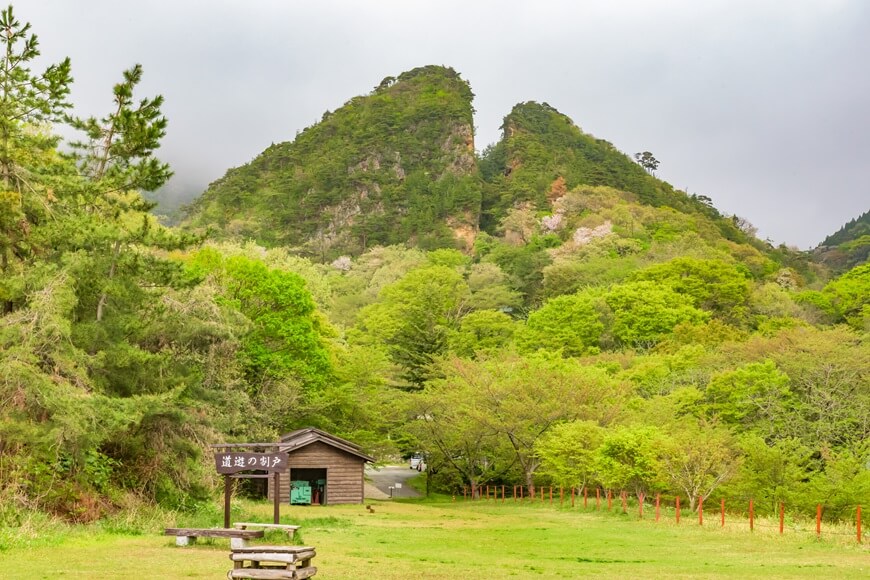
Image: Mining was so intense on Sado Island that a mountain was split in two. Credit: Takashi Images at Adobe Stock.